


Energy is defined as the capacity to do work, or the ability of an entity to act as a force and influence changes in another entity (in physics this would be referred to as ‘systems’). The use of this capacity is typically linked to performing useful functions for humans, including heating, cooling, powering, lighting, cooking etc (Cleveland and Morris 2014, p. 196).
There are various different forms of energy, however the two general forms that all energy takes is potential (stored) energy or kinetic (working) energy (see forms of energy for more). For example, kinetic energy comes form matter in motion which is said to have the ability to change the motion of another object. Humans use different forms of energy depending on the resources available and social relations in place.
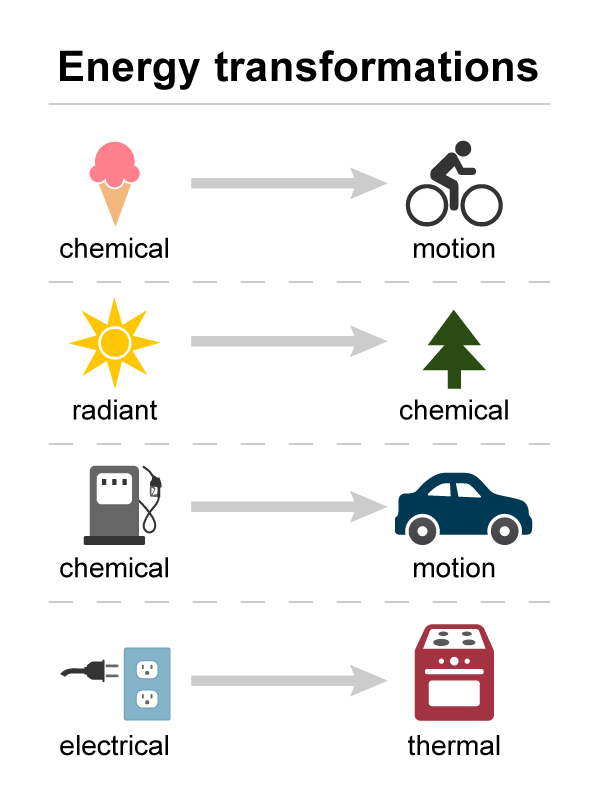
The process of changing forms energy is central to understanding how humans use energy. For example, we can covert thermal energy into mechanical energy using a steam turbine, or nuclear energy to thermal energy with a nuclear reactor, or solar cells convert electromagnetic energy into electric energy. The content of these forms, i.e. the capacity to do work, remains the same during these transformations, even if in some cases it looses some magnitude of its power.
In relation to climate change, energy is extremely important, as the production and consumption of energy is responsible for the vast majority of GHG emissions (Fernandes 2025, 8). However, the climate crises must not be reduced to merely an issue of energy but rather, one regarding the fundamental transformation of the entire social system.
References
https://ingenium.ca/en/learn/science-at-home/physics-of-energy/
https://www.eia.gov/energyexplained/what-is-energy/
Potter, Energy Cheat Sheet (2024)
Cleveland, Cutler J., and Christopher G. Morris. 2014. Dictionary of Energy. 2nd ed. Elsevier Science.
Fernandes et al, Energy Transitions Just and Beyond (2025) Report